
Choose the right box for the weight
Small boxes suit books and other dense contents. Larger boxes are better for lighter belongings such as bedding. Test the weight as you pack and stop before a box becomes difficult to handle. Tape the base securely and do not rely on folded flaps to support heavy contents.
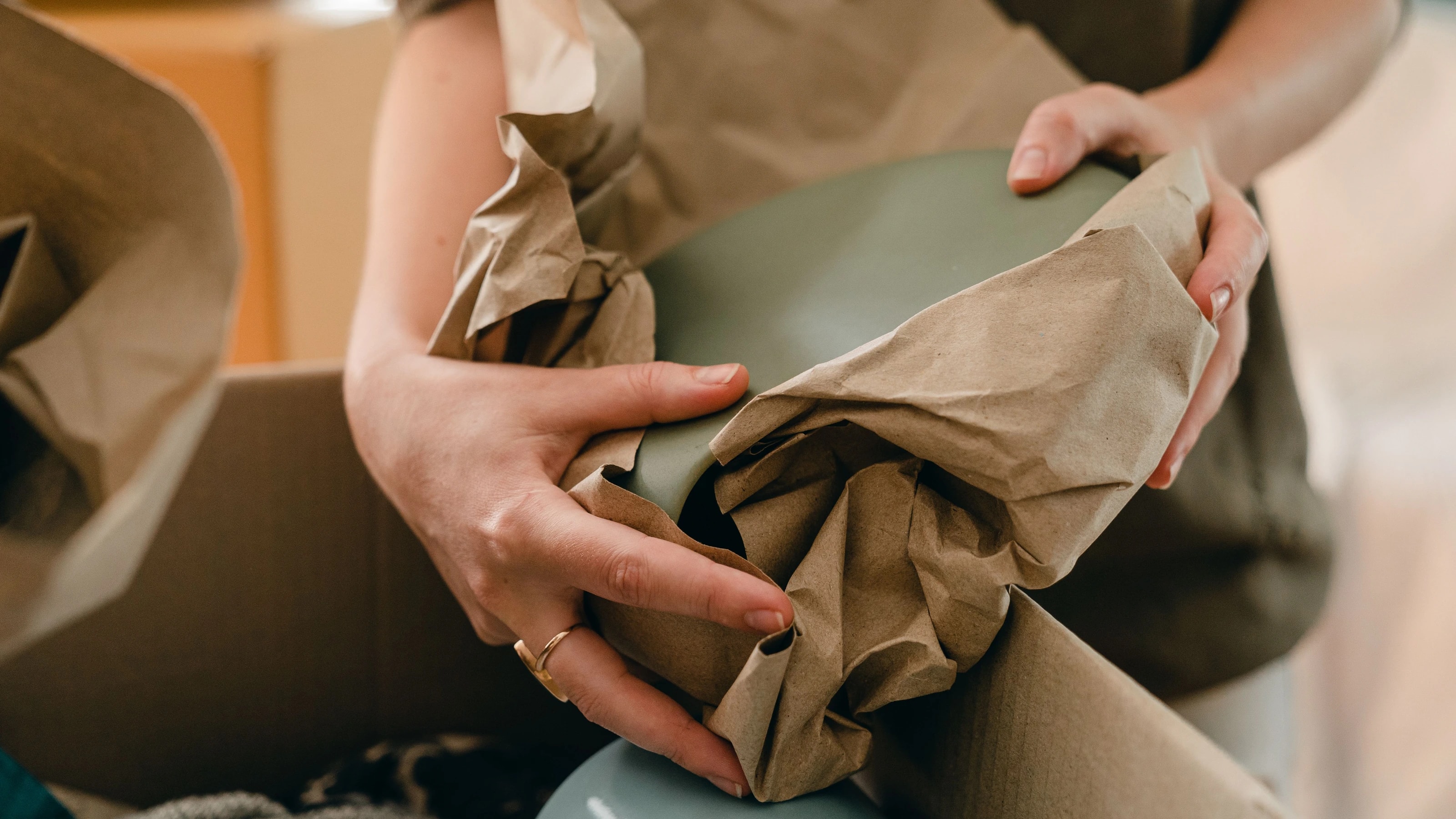
Protect each fragile item
Wrap delicate pieces individually and separate surfaces that could rub together. Fill empty spaces so contents cannot shift. Label fragile boxes clearly and tell the crew what they contain. If you are unsure about artwork, mirrors or sentimental pieces, discuss professional packing before moving day.
Label for the room at the other end
Write the destination room on at least two sides of each box. Add a short contents description and a number if you are keeping an inventory. A box labelled “kitchen, everyday plates” is more useful on the first evening than one labelled “miscellaneous”.
Keep fixings and essentials findable
Put furniture fixings into labelled bags and agree how they will travel with the item. Photograph cable arrangements before disconnection if useful. Keep personal documents, medicines, valuables and the first-night essentials out of the main load.
Packing for storage needs another check
Items must be dry and suitable for the storage arrangement. Clean fabrics and appliances appropriately, avoid sealing moisture inside wrapping and list the contents of each box. Confirm prohibited items and access arrangements with the storage team before delivery.